
#Industry ·2026-02-07


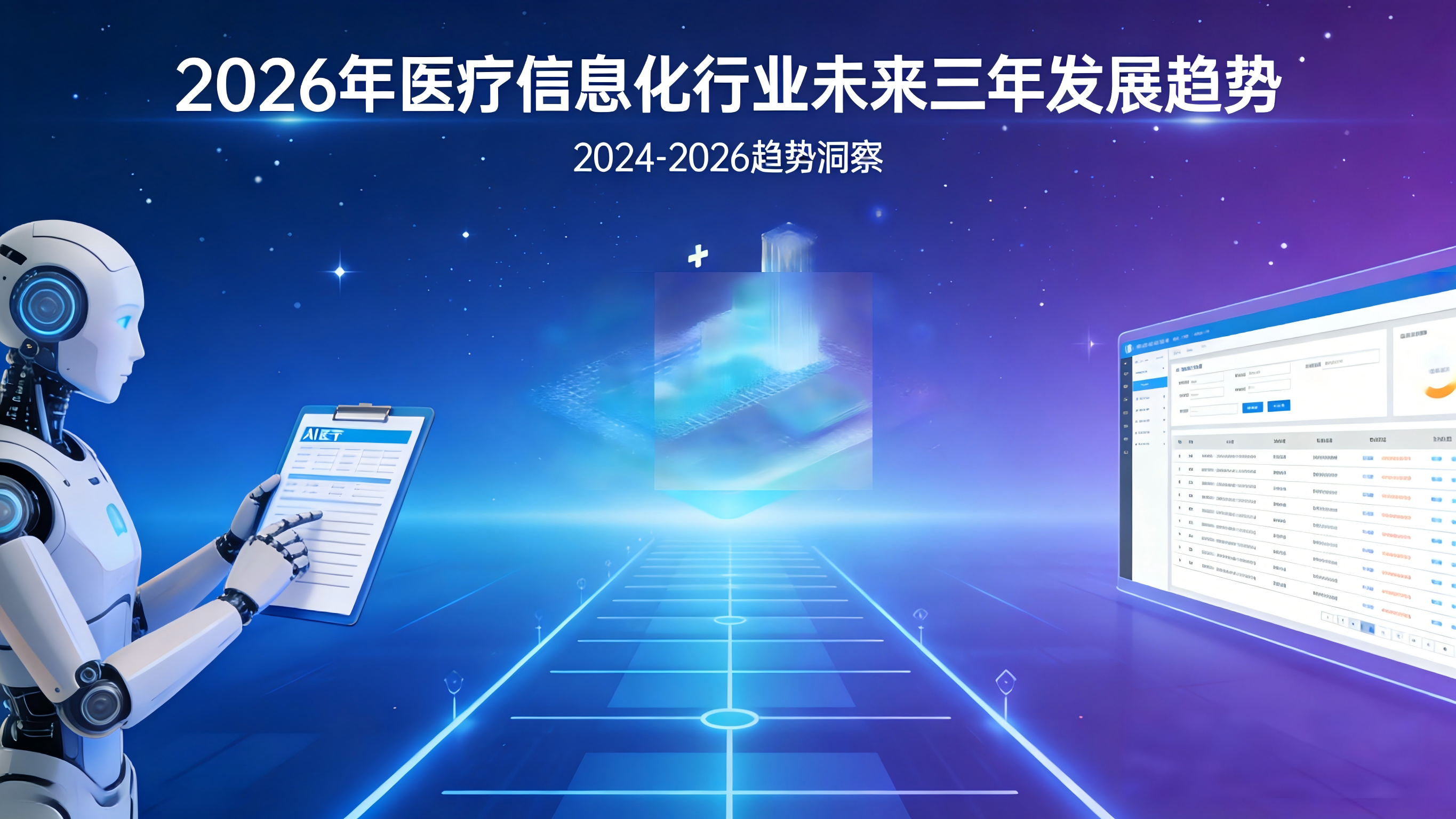
Based on current policy directions and industry dynamics, the main trends are summarized as follows: Policy-Driven Development and Top-Level DesignThe government will continue to introduce policies to support healthcare informatization and promote high-quality industry development. Top-level design documents such as the Healthy China 2030 Planning Outline and the 15th Five-Year Plan for National Health Informatization will be further refined and implemented, providing clear guidance for the industry. At the national level, construction will be accelerated for the four-tier national, provincial, municipal, and county-wide universal health information platforms, enabling the interoperability of electronic health records and electronic medical records, and laying the foundation for the sharing and application of medical data. Digital Transformation and Smart HealthcareOver the next three years, healthcare informatization will gradually evolve from the early stage of hospital informatization construction to a new stage of smart healthcare characterized by data-driven operations, intelligent decision-making, and large model applications. Hospitals will widely adopt next-generation information technologies, including artificial intelligence, big data, cloud computing, and the Internet of Things, to enhance the intelligence of medical services. For example, AI-assisted diagnosis, clinical decision support systems, and smart hospital management platforms will be rapidly deployed, driving the upgrading of medical service models from “informatization” to “intelligentization.” Integration of Healthcare Insurance and Medical InformatizationThe deepening reform of medical insurance payment methods (DRG/DIP) will push healthcare informatization to serve medical insurance management and cost control more closely. In the next three years, hospitals and medical insurance authorities will strengthen data connectivity and system collaboration to realize real-time monitoring and intelligent auditing of medical expenses. This will compel healthcare informatization vendors to provide more refined solutions for medical insurance settlement, cost control, and payment reform. For instance, AI will be applied to the intelligent auditing and risk early warning of medical insurance expenses, helping hospitals improve compliance with insurance regulations. Rise of Medical SaaS and Cloud ServicesAlong with the national initiative of “cloud adoption, data utilization, and intelligence empowerment,” the medical SaaS (Software-as-a-Service) model will gain accelerated popularity. More hospitals and medical institutions will adopt cloud-deployed medical software to reduce IT investment and maintenance costs. Over the next three years, the medical SaaS market is expected to maintain rapid growth, covering hospital management, clinical information systems, telemedicine, health management, and other fields. The rise of the SaaS model will reshape the industry ecosystem: vendors will need to focus more on continuous service capabilities and customer loyalty rather than one-time delivery. Industry Consolidation and Mergers & AcquisitionsFaced with market competition and performance pressure, the healthcare informatization industry will witness a new wave of integration and M&A. Some small and medium-sized vendors may be acquired or integrated by large enterprises to enhance technological and market competitiveness. Data shows that after peaking in 2021, M&A transactions in China’s healthcare sector declined for two consecutive years, followed by a significant rebound in 2024, with transaction volumes returning to relatively high levels in recent years. This indicates a recovery in capital market confidence in healthcare informatization. Large enterprises will expand their business portfolios and optimize resource allocation through M&A. Meanwhile, capital will increasingly focus on segmented sectors with technological barriers and high growth potential, such as medical AI and smart hospital solutions. Regional Market Expansion and Primary Healthcare FocusIn the next three years, healthcare informatization will expand from large urban hospitals to regional medical institutions and primary healthcare facilities. Driven by the tiered diagnosis and treatment system, demand for informatization in primary care will rise substantially. The state will invest more resources in building regional medical information platforms and information systems for primary healthcare institutions, enabling the downward deployment and sharing of high-quality medical resources. This will open new market opportunities for healthcare informatization vendors, especially for software products targeting county-level hospitals and community health centers. Conclusion In summary, over the next three years, the healthcare informatization industry will feature policy leadership, technology-driven growth, integrated innovation, and intensifying competition. Supported by both policy and technology, the industry will shift from incremental expansion to improving quality and efficiency in existing markets. Medical software enterprises must adapt to this transition, proactively transform and upgrade, in order to maintain an invincible position in the fierce market competition.
2026-03-11
2026-02-07

2025-12-22
You can send us a general question inquiry here
LINKS



0371-23627927
consult
top